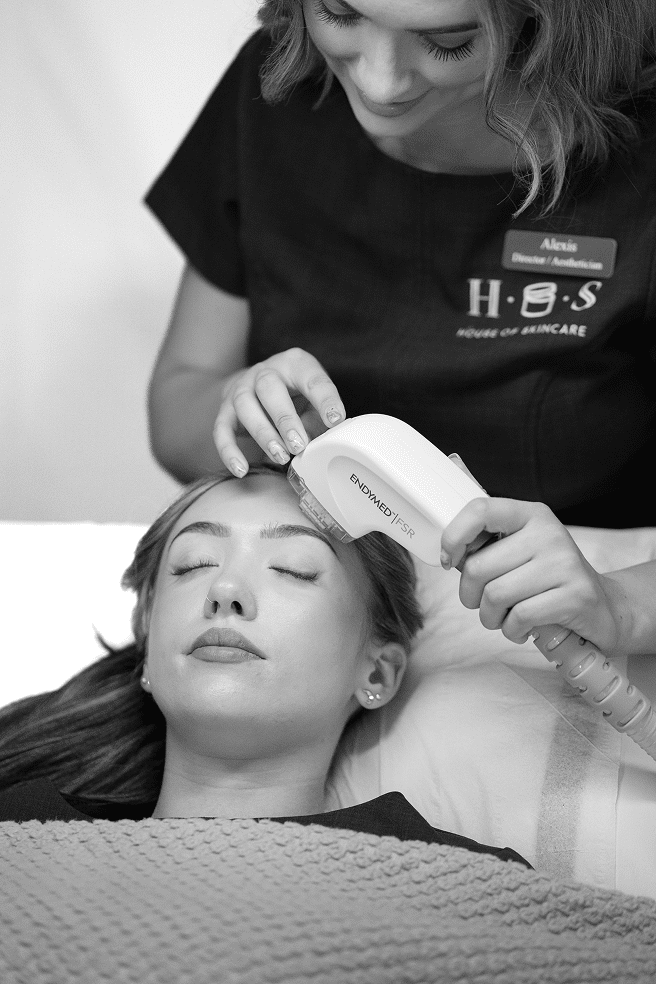
After a summer of sunshine, garden days and holidays abroad, many people notice their skin looks a little different by the time October arrives. Freckles that appeared in July haven’t faded, patches of uneven tone have settled across the cheeks and forehead, and the complexion generally looks less clear than it did in spring. This is sun damage, and along with pigmentation, it’s one of the most common concerns we see at House of Skincare in Newton Abbot as the seasons change.
The good news is that autumn is the perfect time to do something about it. In this guide, we explain how the sun affects your skin, why the cooler months give you the best chance of success, and which treatments can help restore a brighter, more even complexion.
How Summer Sun Leaves Its Mark on Your Skin
When your skin is exposed to UV light, it produces more melanin, the pigment that gives skin its colour. This is the skin’s natural way of protecting itself. Over time, and especially after repeated exposure, melanin can build up unevenly, leaving darker patches behind long after your tan has faded.
UV exposure also breaks down collagen and elastin, which is why sun damage often appears alongside fine lines, rougher texture and a loss of radiance.
Common Signs of Sun Damage
- Sun spots and age spots, often on the face, chest and hands
- Freckles that have darkened or multiplied
- Uneven, blotchy skin tone
- Rough or dry texture
- Dullness and a lack of glow
- Fine lines around the eyes and mouth
Even people who are careful with sun cream can develop these changes, particularly here in Devon, where so many of us spend our summers on the coast or out on Dartmoor.
Why Autumn Is the Ideal Time to Treat Pigmentation
Many of the most effective pigmentation treatments work by encouraging the skin to renew itself. For a short period afterwards, your skin can be more sensitive to sunlight. That makes timing important, and autumn ticks several boxes at once.
Lower UV Levels Support a Safer Recovery
As the days shorten, UV levels drop considerably. You’re also less likely to be sunbathing, gardening for hours or heading off on a beach holiday. This makes it much easier to protect your skin while it heals, reducing the risk of new pigmentation forming and helping your results last.
Time to Complete a Course Before Next Summer
Pigmentation rarely clears after a single appointment. Most people benefit from a course of treatments spaced several weeks apart. Starting in October or November gives you the winter months to complete your course, so your skin is clearer and better prepared by the time spring comes around.
You Can See the Full Extent of the Damage
By early autumn, your summer tan has started to fade, revealing the pigmentation underneath. This gives your practitioner a clearer picture of what needs treating, so your plan can be tailored accurately from the start.
Pigmentation Treatments Available at House of Skincare
Every skin is different, so there’s no single treatment that suits everyone. During your consultation, we’ll assess your skin type, the depth of your pigmentation and your lifestyle before recommending the best approach. Here are the main options we offer.
Harmony XL Pro
Harmony XL Pro is an award-winning treatment platform used to target pigmentation and sun damage. It uses focused light energy to break up excess pigment, which the body then gradually clears away. Many clients notice sun spots darken slightly before flaking away over the following days, leaving a more even tone behind.
It’s a great option for well-defined sun spots and age spots, as well as for general skin rejuvenation.
Chemical Peels
Chemical peels use carefully selected acids to lift away the outer layer of dull, damaged skin cells and encourage fresh skin to come through. Depending on the strength chosen, peels can improve uneven tone, soften fine lines and refine texture. They’re ideal for widespread, blotchy pigmentation and can be combined with other treatments as part of a wider plan.
Cosmelan
Cosmelan is a professional depigmentation treatment designed for stubborn pigmentation that hasn’t responded to other approaches. It begins with a mask applied in clinic, followed by a tailored home care routine that continues the work over the following months. Rather than relying on light or heat, Cosmelan works by regulating the skin’s pigment production, which makes it suitable for a wide range of skin types. It’s especially effective for deeper or more persistent discolouration, including melasma.
AgeJet
AgeJet is a versatile treatment for concerns including pigmentation, wrinkles and skin marks. It works on the surface of the skin with great precision, making it well suited to individual marks and areas of uneven texture. Because it addresses several concerns at once, it can be a good choice for clients whose sun damage includes both pigmentation and early signs of ageing.
Microneedling
Microneedling creates tiny, controlled channels in the skin that trigger its natural repair process. This boosts collagen production and skin renewal, helping to gradually even out tone and texture. It’s particularly useful when sun damage has also left skin looking rougher or less firm, and it helps your skincare products absorb more effectively too.
Supporting Your Results With AlumierMD Skincare
Clinic treatments deliver the biggest changes, but what you do at home between appointments makes a real difference. We stock the AlumierMD range, a medical-grade skincare line that pairs well with in-clinic pigmentation treatments. Products we often recommend for sun damage include:
- EvenTone Brightening Serum to help target uneven skin tone and dark spots
- Intellibright Complex for more persistent discolouration
- Prep & Enhance Discolouration, a kit designed to prepare the skin before treatment and support results afterwards
- Vitamin Rich Smoother (C&E), an antioxidant serum that helps defend skin against everyday environmental damage
Why SPF Still Matters in Autumn and Winter
UVA rays, which play a major role in pigmentation and skin ageing, are present all year round and can pass through cloud and glass. Wearing a broad-spectrum SPF every day, such as Clear Shield Broad Spectrum SPF 42, is one of the most important things you can do to protect your results and stop new pigmentation from forming.
Is It Sun Damage or Melasma?
Not all pigmentation is caused by the sun alone. Melasma, which often appears as larger, symmetrical patches across the cheeks, forehead or upper lip, is linked to hormones as well as UV exposure, and it needs a different approach. Some treatments that work well for sun spots can actually make melasma worse, which is why Cosmelan is often our preferred option for this type of pigmentation.
If you’re unsure which you have, our guide to Melasma treatment in Devon explains the differences in more detail, and a consultation will confirm exactly what’s going on.
Book Your Sun Damage Consultation in Newton Abbot
Summer sun leaves many of us with sun spots, uneven tone, and dull skin, and autumn offers the ideal window to fix it. Lower UV levels make recovery easier, and starting now gives you time to complete a full course of treatment before next summer. With Harmony XL Pro, chemical peels, AgeJet, and microneedling, supported by AlumierMD skincare at home, we offer options for every skin type and level of damage.
If you’re looking for sun damage treatment in Devon, every plan at House of Skincare begins with a thorough consultation, so you’ll know exactly which approach is right for you. Based in Newton Abbot, our clinic welcomes clients from across Exeter and Devon. Get in touch today to book your consultation and start the new season with clearer, brighter skin.