Deciding to book laser hair removal is often the easy part. Knowing what actually happens once you arrive at the clinic, how the treatment feels, and what your skin will do afterwards is where most people start searching for answers.
At House of Skincare in Newton Abbot, we carry out laser hair removal using Soprano Titanium, one of the most advanced systems available in Devon. We welcome clients from across the country, including many who travel to us from Exeter, Torquay and the surrounding towns.
Understanding the process from start to finish helps you get better results, avoid common mistakes, and feel far more relaxed on the day. Here is a clear, honest walkthrough of what to expect at every stage.
How Laser Hair Removal Actually Works
Laser hair removal works by targeting the pigment within the hair follicle. The laser energy is absorbed by that pigment, converted into heat, and used to disable the follicle so it can no longer produce hair effectively.
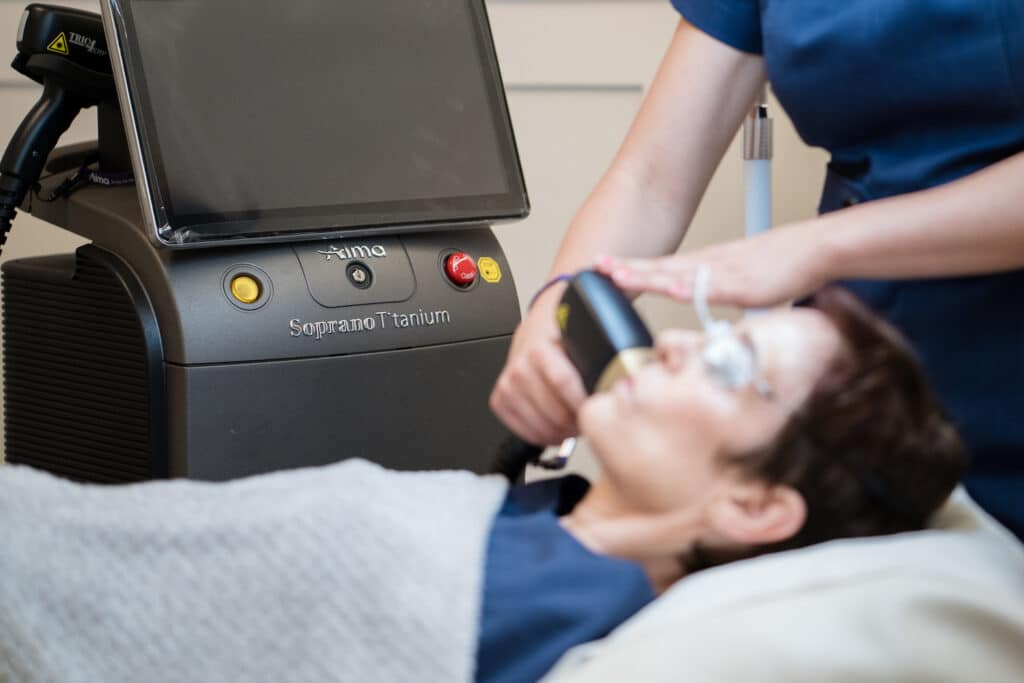
Soprano Titanium uses three laser wavelengths at once, which means it can treat a wider range of skin tones and hair types than older single-wavelength systems. It also uses a gliding, in-motion technique with a cooled applicator rather than firing individual shots into static areas. For you, that translates into a more comfortable session and quicker coverage across larger areas such as legs, backs and chests.
Because hair grows in cycles, the laser can only affect follicles that are in their active growth phase at the time of treatment. This is why a course of sessions is needed rather than a single appointment.
Before Your Laser Hair Removal Treatment
Preparation has a genuine influence on your results. The steps below are straightforward, but skipping them can compromise safety and effectiveness.
Your Consultation and Patch Test
Every course begins with a consultation at our Newton Abbot clinic. We assess your skin type, hair colour and density, discuss your medical history, and check for anything that might affect suitability, such as certain medications, recent sun exposure or specific skin conditions.
A patch test is then carried out on a small area. This allows us to check how your skin responds and to select the correct settings for your treatment. There is usually a short waiting period between the patch test and your first full session, which gives us time to confirm your skin has reacted well.
Avoid Sun Exposure and Fake Tan
Tanned skin, whether from the sun, a sunbed or a bottle, changes how the laser interacts with your skin. Additional pigment in the skin competes with the pigment in the hair, which raises the risk of unwanted reactions.
Avoid direct sun exposure on the treatment area for around four weeks beforehand, and stop using self tanning products for at least two weeks. Daily SPF is worth building into your routine anyway, and something like AlumierMD Sheer Hydration Broad Spectrum SPF 30 works well year round in the Devon climate.
Shave, Do Not Wax or Pluck
This is the step people get wrong most often. You will need to shave the treatment area roughly 24 hours before your appointment, so the hair shaft is removed but the follicle beneath the skin remains intact.
Waxing, plucking, threading and epilating all remove the hair from the root, which leaves the laser with no target. Avoid these methods for at least four weeks before your first session and throughout your entire course.
Skincare and Product Adjustments
Retinoids, strong acids and certain prescribed treatments can increase skin sensitivity. Let us know exactly what you are using so we can advise whether anything needs pausing beforehand. Arrive with clean skin on the day, free from deodorant, makeup, moisturiser or fake tan residue.
During Your Laser Hair Removal Session
What The Laser Feels Like
Most people are pleasantly surprised. Soprano Titanium uses a cooled applicator that gradually heats the follicle while keeping the surface of the skin comfortable, so the sensation is closer to a warm massage than the sharp snap associated with older laser systems.
You may notice a mild warmth or a slight tingling, particularly over bonier areas or coarser hair. Discomfort is generally very manageable, and you can tell your practitioner at any point if you would like the settings adjusted.
You will be given protective eyewear for the duration of the session, and the treatment area will be cleaned before we begin.
How Long Treatment Takes
Session length depends entirely on the size of the area. Smaller regions such as the upper lip, underarms or bikini line can take a matter of minutes. Larger areas like full legs, a back or a chest take considerably longer.
Many clients fit smaller treatments around a work break or the school run, which is one of the practical advantages of this technology. If you are travelling in from Exeter or further afield, we can usually group areas into a single appointment to make the journey worthwhile.
After Your Laser Hair Removal Treatment
The First Forty-Eight Hours
Mild redness and a feeling of warmth in the treated area are completely normal and usually settle within a few hours. Some people notice small raised bumps around the follicles, which is a sign the treatment has reached its target and typically resolves quickly.
For the first day or two, avoid hot baths, saunas, steam rooms, swimming pools and intense exercise, as heat and sweat can irritate freshly treated skin. Skip perfumed products and stick to gentle, soothing formulations. A calming hydrator such as AlumierMD Calm-R is a good choice during this window.
The Shedding Phase
Between one and three weeks after each session, treated hairs begin to shed. It can look as though hair is growing back, but what you are actually seeing is the treated hair working its way out of the follicle.
Gentle exfoliation can help this process along, though you should wait until any sensitivity has fully settled before introducing it. Resist the urge to pluck anything that appears during this stage. Shaving is fine between appointments.
Protecting Your Results
Sun protection matters more than ever after treatment. Treated skin is temporarily more vulnerable to UV, and unprotected exposure can lead to pigmentation changes. Apply a broad-spectrum SPF daily to any exposed treated area, and keep it up between sessions.
How Many Sessions Will You Need?
Because the laser only affects follicles in their active growth phase, a course of sessions spaced several weeks apart is needed to catch every follicle at the right moment. Most people require a course of treatments, with the exact number influenced by the area being treated, your hair colour and thickness, your skin type and any underlying hormonal factors.
Your practitioner will map out a realistic plan at your consultation rather than giving you a one-size-fits-all figure. Hormonal areas such as the face and bikini line often need more sessions than areas like the legs or underarms, and some clients choose occasional maintenance appointments afterwards.
Ready to Book Laser Hair Removal in Newton Abbot?
Laser hair removal is a straightforward, well-tolerated treatment when it is properly prepared for and correctly aftercared. The essentials are simple: attend your consultation and patch test, avoid sun and fake tan beforehand, shave rather than wax, expect mild warmth and redness on the day, allow for a shedding phase, and protect your skin with SPF throughout your course.
Soprano Titanium makes the process more comfortable and more efficient than many people expect, and our practitioners will guide you through every stage so there are no surprises.
If you are considering laser hair removal in Newton Abbot, or you are searching for a clinic within easy reach of Exeter and the wider Devon area, our team would be delighted to talk it through with you. Book your consultation online with House of Skincare and find out exactly what your treatment plan would look like.